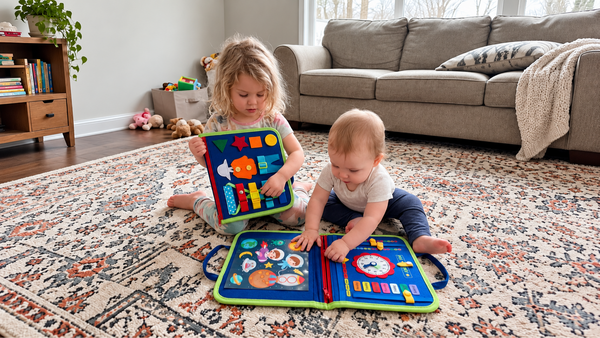

Finding toys that hold a toddler's attention while encouraging them to learn something new isn't always easy. Busy boards offer a practical solution by combining familiar objects, interactive features and simple challenges into one toy that children can explore at their own pace.
But what exactly is a busy board, and what age is it best suited for? In short, most are designed for toddlers between about 1 and 4 years old, with some simpler designs suitable from 6 months. In this guide, we'll cover how these toys work, the activities they typically include and the benefits they can offer at different stages of development.
What Is a Busy Board?
A busy board is an interactive toy that brings together everyday objects and hands-on activities for toddlers to explore. Instead of having one specific function, it features different components that children can move, fasten, open, close or match. These activities are often inspired by familiar tasks, such as zipping up a jacket or fastening a buckle, giving toddlers an opportunity to practice similar movements through play.
Busy boards are commonly associated with Montessori-inspired learning because they encourage children to experiment and discover how things work for themselves. They come in several designs, from wooden boards with attached components to soft fabric versions with interactive pages. Although their appearance may differ, the main idea remains the same, providing a variety of activities that children can explore through direct interaction.
What Does a Busy Board Typically Include?
Busy boards can contain anything from a handful of basic activities to a much larger selection of interactive features. The exact combination varies by design, but most include familiar objects and simple challenges that encourage toddlers to use their hands in different ways.
Common busy board features include:
- Zippers and buckles: Familiar fasteners that children can practice opening and closing.
- Buttons and laces: Activities involving more precise finger movements and coordination.
- Shape and color matching: Games that involve recognizing differences and connecting corresponding pieces.
- Sliding and spinning components: Moving parts that encourage children to experiment with different actions.
- Puzzles and sorting games: Activities that introduce matching, sequencing and simple problem-solving.
- Letters, numbers and learning clocks: Features that introduce early learning concepts for older toddlers.
The variety allows children to move between different tasks depending on what interests them. A toddler might spend several minutes trying to fasten a buckle before moving on to a matching game, while another may prefer exploring the moving components. The most useful features are those that suit your child's current abilities while offering something new to try.

The Best Age for a Busy Board
Most busy boards are designed for children from 12 months to 5 years old, with some simpler designs suitable from 6 months. They tend to be most engaging between 18 months and 3 years, when toddlers are eager to practice fastening, matching and figuring out how things work. Even so, the right starting point depends on the specific board, as some include simple activities for younger children while others have more involved tasks intended for toddlers with greater hand control.
As children grow, the way they interact with a busy board often changes. An activity that initially involves simply moving or touching a component may eventually become a task they can complete with greater accuracy and independence.
Busy Boards for 1-Year-Olds
One-year-olds are naturally curious about objects they can touch, move and investigate. At this stage, age-appropriate busy boards with simple interactive features can introduce different textures, basic movements and opportunities to explore how objects work.
A younger toddler enjoys opening a large flap, moving a securely attached piece or exploring different fabric textures without necessarily trying to complete a specific task. Choose a board suited to their age, check that every piece is securely attached and supervise play closely.
Busy Boards for 2-Year-Olds
By age two, many toddlers are becoming more comfortable with activities that involve several movements or a clear goal. Busy boards featuring buckles, zippers, shape matching and simple puzzles can offer interesting challenges as their hand coordination develops.
For example, fastening a buckle requires children to line up two pieces before pressing them together, while matching games encourage them to recognize shapes or colors. Having different activities available also gives toddlers the freedom to switch between familiar tasks and new challenges without needing a separate toy for each one.
Busy Boards for 3-Year-Olds and Older
Older toddlers are usually ready for activities that require greater precision, concentration or several steps to complete. Threading laces, working with buttons, solving more detailed puzzles and exploring numbers or letters can introduce challenges beyond those found on simpler boards.
A busy board with varied activities can remain interesting as children become more confident, particularly when it includes features they weren't ready to use when they first received it. However, age ranges are only a starting point, and the right activities will always depend on your child's interests and abilities.
How Is a Busy Board Different From Other Activity Toys?
Traditional activity toys often focus on one task, such as stacking blocks, sorting shapes or completing a puzzle. A busy board combines several types of play in one place, allowing children to explore different movements and challenges without switching between multiple toys.
Another difference is the emphasis on everyday practical activities. Rather than simply pressing buttons to activate lights or sounds, toddlers can work with familiar fasteners and moving parts, discovering how they function through repeated attempts. Busy boards complement other toys rather than replacing them, offering a different type of hands-on experience alongside building, imaginative play and outdoor activities.

Benefits of Busy Boards for Toddlers
Beyond keeping toddlers occupied, busy boards offer opportunities to practice skills that are useful in everyday life. Their interactive features encourage children to coordinate movements, investigate unfamiliar tasks and become more comfortable experimenting with different solutions.
Fine Motor Skills and Hand-Eye Coordination
Opening a zipper, turning a component or fastening a buckle involves small, controlled movements of the hands and fingers. These activities give toddlers opportunities to practice coordination while working with objects that resemble those they encounter when getting dressed or handling everyday items.
Some tasks also require both hands to work together, such as holding one side of a buckle steady while connecting the other. As children become familiar with these movements, they can gradually approach more detailed activities that require greater precision.
Problem-Solving and Independent Exploration
Busy boards encourage toddlers to figure out how different components work rather than relying on someone to complete each task for them. A shape might need to be turned before it fits, or a fastener may require a different movement than they initially expected.
These small challenges create opportunities to experiment, make adjustments and discover solutions through practice. Giving children time to investigate before offering help can also make the experience more rewarding when they finally work something out.
Sensory Learning and Hands-On Discovery
Different materials, textures and interactive features make busy boards appealing to toddlers who enjoy exploring through touch and movement. Soft fabric, smooth fasteners and pieces that slide or rotate provide a range of physical experiences within the same toy.
Children can also observe how objects respond to their actions, whether they're pulling a zipper or moving a piece along a track. This combination of touching, watching and experimenting makes the activity more engaging than simply looking at pictures or listening to instructions.
Concentration and Patience
Some busy board activities are easy to complete, while others take several attempts to understand. Working through a challenging buckle or matching puzzle gives toddlers an opportunity to spend time on a particular task and try again when it doesn't work immediately.
Because children can choose which activities to explore, they can move at a pace that feels comfortable. There's no need to expect long periods of concentration, especially from younger toddlers. Even short sessions provide opportunities to practice focusing on an activity and working through small challenges.
How to Choose the Right Busy Board for Your Toddler
Choosing a busy board starts with finding one that suits your child's age and current abilities. A toy filled with complicated fasteners may not appeal to a younger toddler, while an older child might quickly lose interest in a board offering only a few basic movements. Look for a combination of activities that feel familiar alongside others that introduce a manageable challenge.
Safety and construction are equally important, so check that every piece is securely attached, the materials are durable and the board suits your child’s age, supervising play closely for children under three. Parent reviews often mention glued-on parts coming loose on cheaper boards, so stitched or firmly fixed components are worth looking for. It’s also worth considering where the toy will be used, as a larger wooden board suits home play, while a lightweight fabric version is easier to take on outings.
For families looking for a portable option, the Toddla Montessori Busy Board is a parent favorite with more than 1,100 reviews, bringing together over 30 activities, including zippers, buckles, laces and matching games, on stitched, non-toxic felt. Its detachable pages make it easy to bring a few activities on car rides, flights or restaurant visits without packing a bag full of toys. With Standard and Plus versions available, it offers activities your toddler can enjoy right away while leaving room for new challenges as their skills grow.
Final Thoughts: Is a Busy Board Worth It?
Yes, a busy board is well worth it, bringing familiar objects and small challenges together in one toy that gives toddlers a hands-on way to learn through play. From exploring basic movements to fastening buckles and matching shapes, it offers screen-free experiences that stay interesting as new skills develop.
Choosing the right one comes down to finding a sturdy, age-appropriate design with activities that match your child’s interests and abilities. Pick well, and it can become a favorite part of playtime at home or on the go, growing with your toddler as they explore at their own pace.